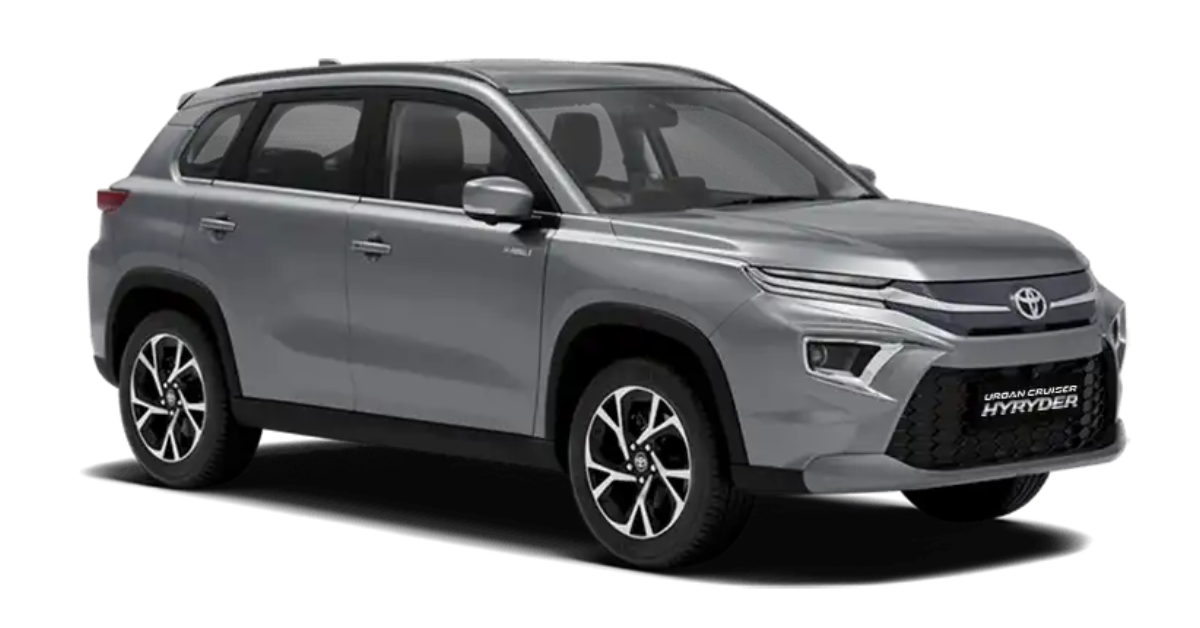
India’s hybrid passenger vehicle segment continued its upward trajectory in June 2026, strengthening its position as one of the fastest-growing alternative fuel categories in the country. While electric vehicles (EVs) grabbed headlines with record retail sales, hybrid cars quietly expanded their market share as consumers increasingly looked for better fuel efficiency without compromising on long-distance usability.
According to retail industry data, hybrid vehicles accounted for approximately 8.3% of all passenger vehicle sales in June 2026, contributing to the record 40.35% share achieved by alternative fuel vehicles (CNG, hybrid and EV combined). The surge was largely driven by rising fuel prices during the month and growing consumer awareness about lower running costs.
Fuel Prices Push Buyers Towards Hybrids
June proved to be a turning point for alternative fuel vehicles. The increase in petrol and diesel prices encouraged many buyers to reconsider conventional internal combustion engine (ICE) vehicles.
Unlike battery electric vehicles, hybrids offer significant improvements in fuel economy while eliminating concerns over charging infrastructure and range. This makes them particularly attractive for buyers in Tier 2 and Tier 3 cities, where public charging networks remain limited.
Industry observers note that hybrids have increasingly become the “middle ground” for customers who want lower fuel bills but are not yet ready to switch to a fully electric vehicle.
Toyota Continues to Lead the Hybrid Market
Toyota Kirloskar Motor remains India’s dominant hybrid manufacturer, thanks to the strong performance of the Urban Cruiser Hyryder and the Innova HyCross. Both models have established themselves as benchmark products in their respective SUV and MPV segments.
Toyota reported domestic wholesale sales of 28,441 units in June 2026, registering healthy year-on-year growth. The Hyryder continued to be among the company’s highest-selling models, while sustained demand for the Innova HyCross reinforced consumer acceptance of strong-hybrid technology.
The partnership between Toyota and Maruti Suzuki has also significantly expanded hybrid accessibility. Maruti’s Grand Vitara, which shares its strong-hybrid powertrain with the Hyryder, continues to attract buyers looking for fuel-efficient midsize SUVs.
Strong Hybrids Becoming a Premium Choice
Unlike CNG vehicles that primarily target affordability, strong hybrids are increasingly positioned as premium offerings that deliver a blend of performance, refinement and efficiency.
Customers are willing to pay a higher upfront price in exchange for:
- Excellent real-world fuel efficiency
- Seamless automatic driving experience
- Lower emissions
- Proven long-distance capability
- Reduced dependence on charging infrastructure
For many urban buyers, these benefits outweigh the initial premium over petrol-only variants.
EV Growth Doesn’t Diminish Hybrid Appeal
Electric passenger vehicles achieved record sales in June 2026, crossing 31,000 monthly units for the first time. However, the rapid growth of EVs has not slowed hybrid demand.
Instead, the market appears to be diversifying across multiple powertrain options. Consumers are choosing technologies based on their driving patterns rather than following a single trend.
Industry experts believe hybrids will continue serving customers who frequently travel long distances or lack reliable home charging facilities, while EVs will increasingly dominate urban commuting.
More Hybrid Options on the Horizon
Several manufacturers are expected to strengthen their hybrid portfolios over the coming months.
Japanese manufacturers continue to view India as a key growth market for strong hybrids, while brands such as MG Motor have indicated plans to expand into plug-in hybrid technology alongside their electric vehicle strategy.
Growing customer acceptance and improving economies of scale could also encourage additional automakers to introduce hybrid variants across SUVs and premium sedans.