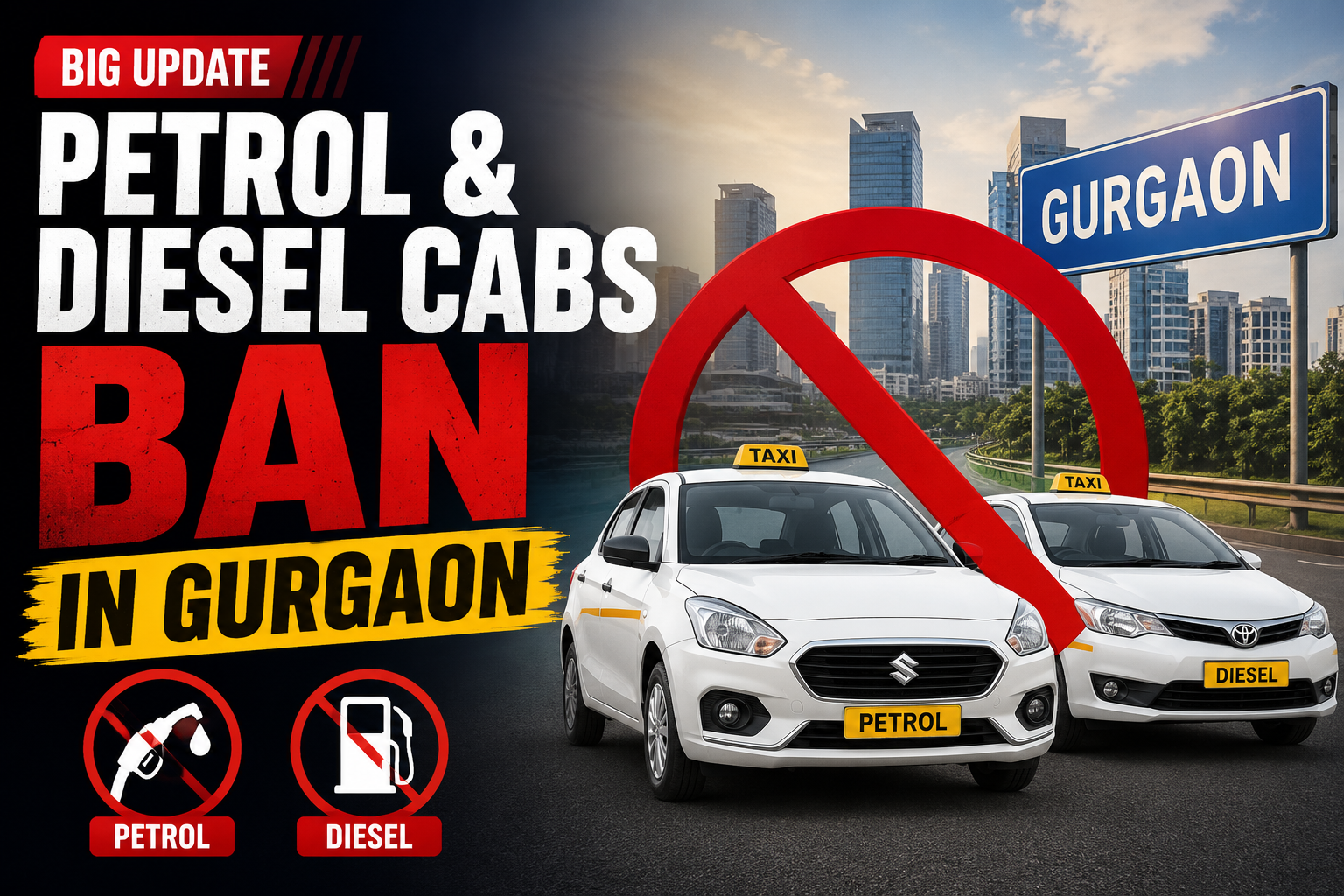
The transition to cleaner transportation in the National Capital Region (NCR) has taken a major step forward, with Gurgaon now at the center of a sweeping policy shift. The Haryana government has approved new regulations that effectively ban petrol and diesel-powered cabs from app-based aggregator fleets operating in NCR districts, including Gurgaon, from January 1, 2026.
The move follows directives issued by the Commission for Air Quality Management (CAQM), which has been aggressively pushing for cleaner commercial mobility solutions across Delhi-NCR to tackle worsening air pollution. Under the new framework, only electric vehicles (EVs), CNG-powered vehicles, and other approved clean-fuel vehicles will be allowed to join aggregator fleets such as ride-hailing and delivery platforms in Gurgaon and other NCR districts.
What Exactly Is Being Banned?
The regulation does not immediately remove all existing petrol and diesel cabs from roads. Instead, it prohibits the onboarding of new petrol and diesel vehicles into fleets operated by cab aggregators, delivery firms, and e-commerce platforms starting January 2026.
This means companies like ride-hailing operators and commercial fleet owners will only be able to add EVs or CNG vehicles going forward. Haryana’s revised rules align closely with the CAQM’s broader anti-pollution roadmap for the NCR region.
The regulation will apply across Haryana’s NCR districts, including Gurgaon, Faridabad, Sonipat, and others.
Why Gurgaon Is Being Targeted
Gurgaon has emerged as one of NCR’s largest commercial mobility hubs, with thousands of cabs operating daily between Delhi, corporate offices, airports, and residential clusters. The city also suffers from severe seasonal air pollution, often recording hazardous AQI levels during winter months.
Authorities believe commercial vehicles contribute disproportionately to emissions because they operate for longer durations and cover significantly higher daily distances than private vehicles. The CAQM has repeatedly highlighted the need for rapid electrification of commercial fleets to reduce vehicular pollution in the NCR.
The policy is also part of a larger transition already underway across Delhi-NCR, where older diesel and petrol vehicles are facing tighter restrictions under various GRAP and CAQM norms.
New Rules For Aggregators
Apart from fuel restrictions, Haryana’s updated aggregator policy introduces stricter operational and safety guidelines for app-based cab services. According to reports, the revised framework includes:
- Mandatory licensing for aggregators
- GPS tracking and panic buttons in vehicles
- Driver training programs
- Passenger and driver insurance
- Cybersecurity requirements for mobile applications
- 24×7 control rooms for customer assistance
The government also plans to integrate fleet registration and monitoring through a dedicated clean mobility portal.
Industry Impact And Challenges
While the policy is expected to accelerate EV adoption, it also presents significant challenges for fleet operators and drivers. Electric vehicle acquisition costs, charging infrastructure gaps, and downtime concerns remain major hurdles for commercial operators.
Industry stakeholders have already raised concerns regarding the pace of transition. In a related development, the CAQM earlier relaxed restrictions for BS-VI petrol two-wheelers used by delivery platforms after companies highlighted low EV adoption and limited availability of affordable electric models.
Experts believe Gurgaon’s success as a clean mobility hub will largely depend on how quickly charging infrastructure expands and whether financial incentives remain attractive for commercial buyers.
What This Means For Commuters
For passengers, the immediate impact may be minimal since existing petrol and diesel cabs can continue operations for now. However, over the next few years, commuters in Gurgaon are expected to see a growing number of electric and CNG-powered taxis on the road.
The shift could eventually lead to quieter urban mobility, lower operating emissions, and reduced fuel dependency. On the flip side, fleet transition costs may initially influence ride pricing and vehicle availability during peak demand periods.