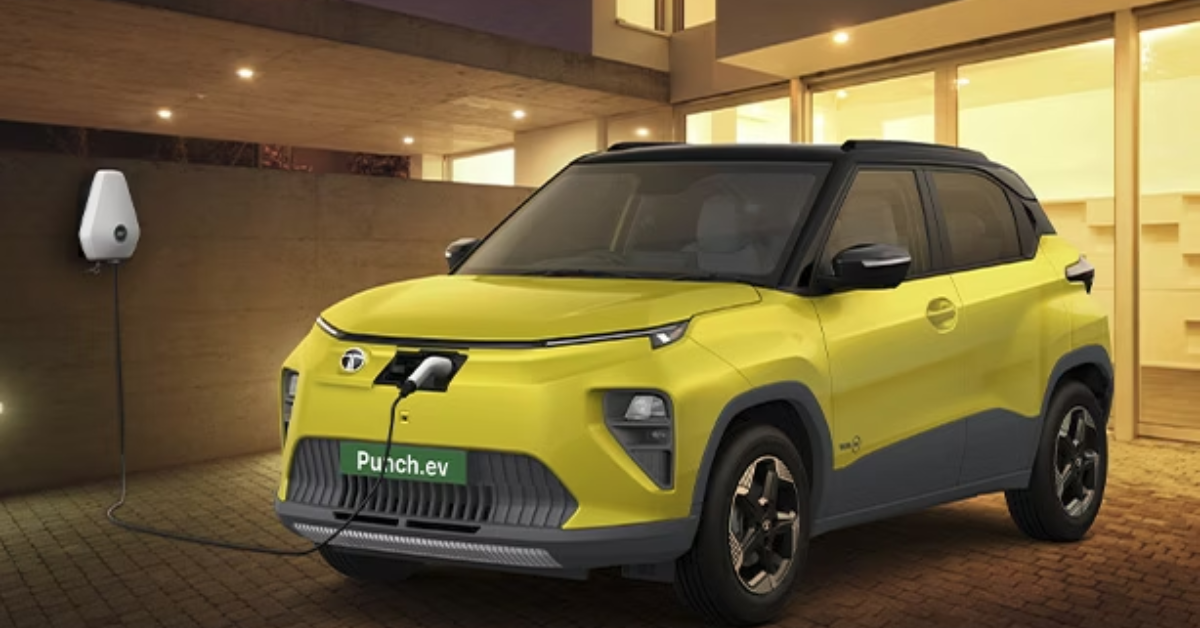
Tata Motors officially launched the 2026 Tata Punch EV facelift in India this week, marking the first major update to its popular all-electric micro-SUV since its introduction. The refreshed model is aimed at strengthening Tata’s foothold in the country’s entry-level EV market by offering improved range, new features, and more affordable ownership options.
Pricing, Variants and Accessibility
The facelifted Punch EV boasts a starting price of ₹9.69 lakh (ex-showroom) for the base variant and goes up to around ₹12.59 lakh for top trims — positioning it as one of India’s most competitively priced electric SUVs. To further lower the initial cost for buyers, Tata Motors is offering a Battery-as-a-Service (BaaS) option where the EV alone is priced from ₹6.49 lakh, with battery usage charged at approximately ₹2.6 per km.
BaaS is part of Tata’s strategy to narrow the gap between internal-combustion engine (ICE) and EV ownership costs in the mass market. According to company officials, expanding battery leasing beyond the Punch EV to other affordable electric cars is on the roadmap.
Bigger Battery and Enhanced Range
A standout update for the 2026 Punch EV is its new 40 kWh battery option, replacing smaller packs from previous iterations. The larger battery delivers an ARAI-certified range of 468 km, with a real-world range of about 355 km — a significant jump from earlier figures and an important enhancement for both daily commuting and occasional intercity travel. Tata Motors also continues to offer the 30 kWh battery on select variants.
Fast-charging capability remains a key strength. The Punch EV can recharge from 20 % to 80 % using a 65 kW DC fast charger in roughly 26 minutes, and a brief 15-minute quick charge can add around 135 km of real-world range.
Features and Safety
The updated Punch EV comes packed with modern features across variants, including a 10.25-inch touchscreen infotainment system, fully digital driver display, wireless charging, and connected-car technology. Select trims also offer ventilated seats, ambient lighting and cameras with 360-degree views.
On the safety front, Tata has maintained a strong suite of active and passive protections, such as six airbags, electronic stability systems and hill-hold assist. While official crash test results for this facelift are yet to be published, the predecessor model earned high safety scores, and expectations are that the facelifted variant will continue that trend.
Market Impact and Strategy
The Punch EV continues to compete in the rapidly evolving budget EV segment alongside rivals such as the Citroën eC3, MG Windsor EV and others. Tata Motors expects the new Punch EV to drive a 30–50 % increase in volumes over the coming year by addressing key consumer concerns on cost, range and usability.
Industry experts view the Punch EV facelift as a pivotal vehicle in Tata’s broader goal of accelerating mass electric vehicle adoption in India. By offering both competitive pricing and flexible ownership options, Tata is betting heavily on capturing first-time EV buyers and pushing EV market shares higher in the sub-₹12 lakh consumer segment.