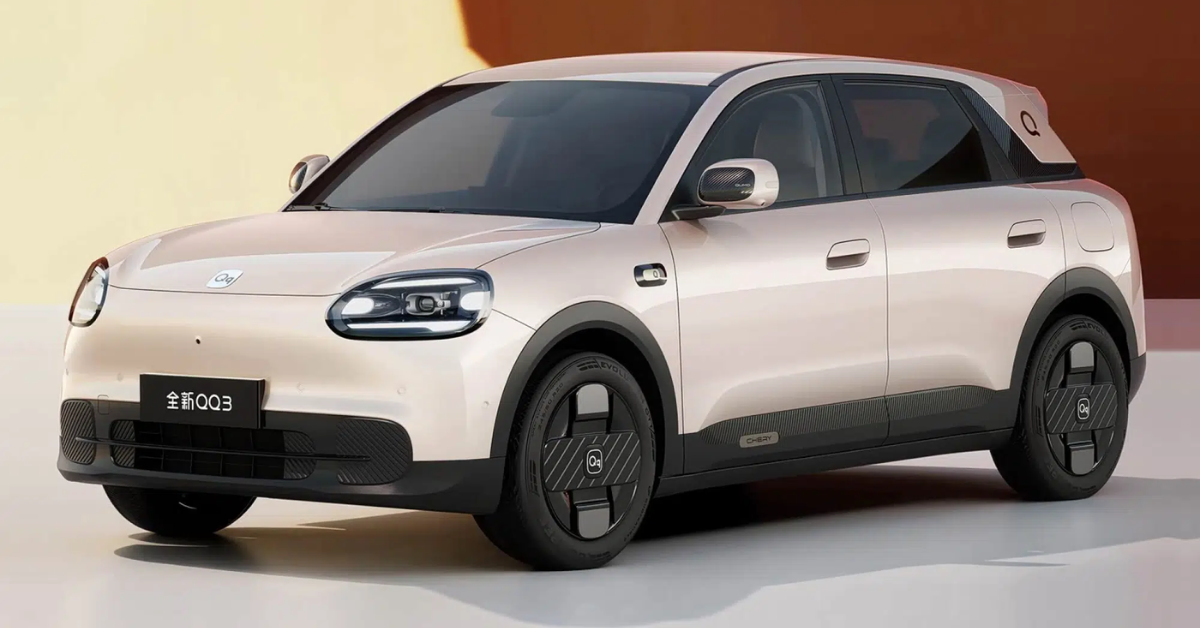
Chinese automaker Chery Automobile has taken a significant step toward entering India’s fast-growing EV market by filing a design patent for its latest budget offering, the Chery QQ3 EV. While a patent filing does not confirm a launch, it strongly indicates intent—and possibly a strategic move to disrupt the entry-level EV segment.
A Strategic Entry via JSW Partnership
Chery’s India plans are closely tied to its partnership with JSW Motor, which is expected to introduce a range of new energy vehicles (NEVs) in the country. The QQ3 EV could join this lineup at a later stage, following the introduction of higher-end models like SUVs and hybrids.
This phased approach suggests Chery is aiming to establish brand presence before targeting mass-market segments with affordable EVs.
Not Just a City Car Anymore
Unlike its earlier generations, the new QQ3 EV has evolved into a larger subcompact hatchback. Measuring around 4.2 metres in length, it sits closer to compact SUVs in terms of footprint, offering a more practical family-oriented package.
The model also features a 70-litre front trunk (frunk), adding to its practicality—an uncommon feature in budget EVs.
Powertrain, Range and Performance
The QQ3 EV is underpinned by a dedicated electric platform and offers two battery options:
- 29.48 kWh battery – up to ~310 km range
- 41.28 kWh battery – up to ~420 km range
Both figures are based on the CLTC cycle. The car also comes with two motor options, delivering up to 120 hp, and notably features a rear-wheel-drive (RWD) setup—rare in this price segment.
Tech-Loaded Cabin in a Budget Package
One of the QQ3 EV’s biggest highlights is its feature-rich interior, which could set new benchmarks in the affordable EV space. Key features include:
- 15.6-inch touchscreen infotainment system
- Digital instrument cluster
- Qualcomm Snapdragon-powered cockpit
- AI-based assistant system
- Heated and ventilated seats
- Ambient lighting and wireless charging
Such features are typically seen in higher-priced EVs, giving the QQ3 EV a strong value proposition.
Aggressive Pricing Could Be a Game-Changer
In China, the QQ3 EV is priced between approximately ₹8 lakh and ₹10.7 lakh (converted), positioning it as a highly affordable electric car.
If Chery manages similar pricing in India, the QQ3 EV could directly challenge popular models like the Tata Nexon EV, especially in the budget-conscious segment.
Market Potential and Challenges
The timing of this patent filing aligns with India’s growing demand for affordable EVs. While premium electric SUVs dominate the market, there remains a gap in the sub-₹12 lakh segment.
However, Chery will face challenges:
- Building brand trust in a new market
- Establishing service and dealership networks
- Competing with established domestic players
Despite these hurdles, the QQ3 EV’s strong initial response in China—garnering tens of thousands of orders shortly after launch—indicates solid global potential.